Prichard Colon's Legacy, Dina Thorslund Bounces Back, Haney-Catterall Initiate Negotiations, Tito Mercado Calls Out Frank Martin!

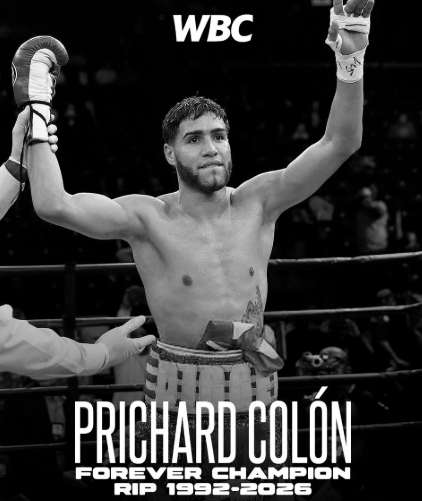
The shadow Prichard Colón left on boxing is massive.
On Thursday, Aug. 13, 2026, Colón’s family announced that the former unbeaten Puerto Rican prospect had died at 33, nearly 11 years after a night in Fairfax, Virginia, transformed a promising young career into a lifelong fight for survival.
His father, Richard Colón, confirmed his son’s passing, bringing an end to a battle that had stretched far beyond anything that rounds, records or championships could measure.
Colón never became the world champion many believed he would become.
He never got the opportunity to discover how far his talent could take him.
Instead, boxing remembers him as something far more complicated.
There is a memory of a fighter whose life became inseparable from the sport's most uncomfortable questions about responsibility, officiating, illegal blows and what happens when the people entrusted with protecting a boxer fail to recognize that something is seriously wrong.
Before that tragedy, Colón was one of the brightest prospects in Puerto Rican boxing.
He entered his final fight with Terrel Williams undefeated at 16-0 with 13 knockouts.
The 23-year-old had fought at an extraordinary pace, winning 14 of his previous 16 contests and building the type of momentum that suggested a world championship was not a distant dream.
Sugar Ray Leonard had praised his talent before the Williams fight, highlighting not only his power but the variety of his punches.
Then came Oct. 17, 2015.
The fight was supposed to be another step toward greatness, but instead, it became one of the darkest nights in modern boxing.
Colón repeatedly complained that Williams was striking him behind the head, an illegal technique commonly referred to as a rabbit punch.
The referee, Joe Cooper, did eventually deduct a point from Williams for one such infraction in the seventh round, but the fight continued after Colón was examined by the ringside physician and deemed able to proceed.
That sequence remains at the center of Colón's story, and it should.
But his story should never be reduced to a single punch.
That distinction matters, and too often does the public forget that minimizing how bad fouls are in reality desensitizes us.
Boxing is a sport in which catastrophic brain injuries can emerge from a complicated accumulation of impacts, and it would be irresponsible to declare that one particular blow alone caused everything that followed.
What is beyond dispute is that Colón absorbed repeated illegal blows, complained about them during the fight, suffered visible distress and later experienced a medical catastrophe that left him with devastating, permanent neurological injuries.
The final rounds were a nightmare of confusion.
Williams scored two knockdowns in the ninth round.
One of the punches came as Colón was falling and landed to the back of his head.
After the round, Colón's corner mistakenly believed the scheduled 10-round fight was over and began removing his gloves.
When they realized another round remained, too much time had passed for the gloves to be properly restored.
The Virginia Athletic Commission directed Cooper to stop the contest, officially ruling it a disqualification.
Colón walked to the dressing room, then everything changed.
He began experiencing dizziness and vomiting before losing consciousness.
He was transported to the hospital, where doctors performed emergency surgery for a subdural hematoma.
He eventually spent 221 days in a coma and never recovered the ability to live independently.
For more than a decade, his family cared for him.
For more than a decade, boxing had to live with the image of a young fighter who entered the ring chasing a championship and never truly left it.
That is why his death is not simply the passing of a former prospect.
It is a reckoning.
Colón's name has remained embedded in boxing's safety conversation precisely because his case exposed how many layers of protection can fail simultaneously.
The referee must recognize an illegal blow.
The fighter must be given adequate time to recover.
The ringside physician must make an informed assessment.
The commission must have the authority to intervene.
The corner must recognize neurological warning signs.
Everyone involved must understand that the objective is not merely to complete the scheduled number of rounds.
The objective is to make sure the fighter gets home, but sometimes the bread and circus of boxing can make the public forget.
Colón's case eventually inspired changes in how boxing approached rabbit punches.
The World Boxing Council later referred to its enhanced enforcement of the rule against blows to the back of the head as the "Prichard Colón Rule," urging referees to be considerably more vigilant because such punches can cause catastrophic neurological damage.
However, a rule written on paper means very little if the person standing three feet away does not enforce it.
That is where boxing still has work to do.
The sport's relationship with illegal blows has always been strange.
A low blow can stop a fight for several minutes.
A deliberate headbutt can produce an immediate warning or point deduction.
A foul committed outside the referee's field of vision can be reviewed, discussed and punished.
Punches to the back of the head have historically occupied an uncomfortable gray area because fighters frequently turn, duck or change position during exchanges.
That gray area cannot become an excuse for negligence.
Referees need clearer, more aggressive standards for what constitutes a dangerous rabbit punch.
Fighters should not have to repeatedly point toward the back of their heads before the official recognizes that something is wrong.
If a boxer is repeatedly struck illegally, the punishment should escalate.
Warning, followed by a point deduction.
A second point deduction, if the fouls continue with no effort to correct it by the offender.
Disqualification if necessary.
The message should be simple and clear, the back of the head is not a target, no matter what frustrations arise in the ring.
If an illegal blow appears to compromise a fighter's neurological function, the referee should have the confidence and authority to stop the contest immediately rather than allowing the drama of the fight to overpower the safety of the athlete.
That is the difficult part for boxing.
Stopping a fight is unpopular, and naturally, the crowd boos.
Promoters complain, and investors lose their cool.
Television commentators speculate about what might have happened if the bout continued.
But none of those things matter when compared with a fighter's brain.
There is no championship worth sacrificing a human life for.
There is no undefeated record worth it, and there is no pay-per-view worth it.
No referee's integrity is worth risking either, at any level.
That lesson became painfully clear again in 2023, when Deontay Wilder delivered an emotional reminder of Colón's name following his violent knockout of Robert Helenius.
Wilder had just witnessed another fighter absorb the kind of devastating punishment that makes boxing's glamour disappear in an instant.
Through tears, Wilder spoke about the reality fighters accept every time they enter the ring.
"Y'all don't f*cking understand what we go through, man... Look at Colon. Prichard Colon. You don't play this, you can't play this. We demand respect at all times for every fighter."
Those words hit differently now.
At the time, they were a warning.
Today, they sound like an obituary for an entire version of boxing that refuses to acknowledge what its athletes sacrifice.
Wilder understood something that casual observers often don't.
Fighters are not characters, and they certainly aren't invincible.
They are not video-game avatars whose health resets after the final bell.
They are human beings who willingly subject themselves to extraordinary physical punishment because they love the sport, because they want to provide for their families, because they want recognition.
After all, they want to become champions.
Sometimes it all comes together because they simply cannot imagine their lives without boxing.
Colón was one of those people, and that is why the story of his death cannot end with condolences.
Condolences are appropriate, and in his case they are necessary, but they are not enough.
Boxing has to work hard to keep changing and protect the people that make the sport great.
Referees must be trained to identify neurological distress more aggressively.
Ringside physicians must have unquestioned authority to intervene.
Commissions must standardize protocols for suspected brain injuries.
Corners need better education about the warning signs of traumatic brain injury.
Fighters must be encouraged to report symptoms without fearing that doing so will make them appear weak or jeopardize a career.
Most importantly, illegal blows must stop being treated as ordinary parts of the chaos.
There is a clear, unmistakable difference between an accidental foul and repeated disregard for a prohibited target.
There is a difference between a fighter turning his head and a punch deliberately following him there.
Beyond that, there is a difference between allowing a boxer to continue after a routine foul and allowing him to continue after he has demonstrated signs that something may be seriously wrong.
Boxing has to become better at recognizing those differences.
Colón's legacy should not simply be that he was a talented fighter whose career ended tragically.
His legacy should be that his life forced boxing to confront the consequences of looking away.
The tragedy is that Colón's greatest contribution to the sport was never supposed to be made outside the ring.
Colón was supposed to become a champion, a beacon of hope for the next generation of Boricua fighters across disciplines.
He was supposed to headline arenas.
He was supposed to carry the Puerto Rican flag into the biggest fights of his generation.
Instead, his name became synonymous with a fight that should never have defined his life.
More than a decade later, he still has something to teach boxing.
Every time a referee aggressively stops an illegal punch, Colón's legacy is there.
When a doctor refuses to let a compromised fighter continue, Colón's legacy is there.
Every time a corner recognizes that its fighter is not okay and chooses the fighter's health over the fight's outcome, Colón's legacy is there.
That is precisely how a tragedy becomes a legacy.
Not by romanticizing the suffering, or by pretending the sport is safer simply because new rules have been written, but by refusing to let the same failures happen again.
Prichard Colón never got the chance to finish his story inside the ring.
Boxing can still make sure the story of what happened to him means something.
The shadow he left behind is massive.
Now it is on boxing to make sure it becomes a warning bright enough that nobody else has to live, or die, inside it.
[Dina Thorslund Triumphant in Cherneka Johnson Unification Clash!]

The next stage of Dina Thorslund's world title run has begun.
Some victories feel like something much larger than boxing, and Thorslund has achieved just that.
A little more than a year after stepping away from the sport's championship picture because she was preparing to become a mother, the Danish star returned to the top of the bantamweight division in emphatic fashion, sweeping Cherneka Johnson on the scorecards to become undisputed champion.
Thorslund didn't simply reclaim a championship.
She collected all four of them.
By the time the final bell sounded inside Caribe Royale, Thorslund had left no doubt about who belonged at the summit of the women's 118-pound division, winning 100-90 on all three judges' scorecards.
The numbers were almost as emphatic as the performance itself.
Thorslund landed 103 power punches to Johnson's 62, and the fight was effectively decided by the relentless pressure that defined the former champion's return.
The scorecards only tell the final chapter of a journey that has been anything but ordinary.
Thorslund had vacated her WBC and WBO bantamweight championships in June 2025 after becoming pregnant.
A month later, she revealed that she had suffered a miscarriage.
For an undefeated fighter who had spent years building herself into one of the dominant forces in women's boxing, the sport suddenly became secondary to something far more personal.
The road back was not immediate, nor was it simple.
It certainly wasn't guaranteed.
Thorslund eventually returned to the ring in January, moving up to featherweight to capture the vacant WBC interim championship against Almudena Alvarez.
The destination was always bantamweight, and the undisputed championship was still waiting.
At 32 years old, Thorslund returned to the division where she had established herself as one of the sport's most accomplished champions, taking on Johnson, the woman who had become undisputed by earning a hotly contested TKO win in July 2025.
Johnson had power, along with championship experience.
She had every reason to believe she could turn Thorslund's comeback story into her own career-defining victory.
Instead, Thorslund turned the entire fight into a reminder of why she had been champion in the first place.
She attacked immediately, leaving the opening bell far in the memory of the anxious crowd.
There was no feeling-out process or a cautious attempt to rediscover herself.
Thorslund stepped forward behind combinations and forced Johnson onto the defensive from the opening bell.
Through three rounds, the difference was already striking, ending with Thorslund having landed 37 punches to Johnson's 14.
Every time Johnson managed to connect, Thorslund appeared to answer with several punches of her own.
One shot would fly in from Johnson, followed by three or four from Thorslund.
One moment of offense, drawing out another lengthy wave of pressure.
The fight became less about whether Johnson could hurt Thorslund and more about whether she could create enough space to actually fight her.
It was fairly obvious to the crowd and commentators that she couldn't.
Johnson's power, which had helped her climb to the undisputed championship, never became a consistent weapon.
Thorslund's movement and offensive volume repeatedly prevented her from establishing the exchanges she needed.
By the championship rounds, the outcome was already clear.
Thorslund was closing the door on any possibility that the judges could see the fight differently.
When the final bell sounded, all three judges had arrived at the same conclusion.
100-90.
Thorslund blitzed her opponent ten rounds to none.
An undisputed championship had been restored to its rightful place around Thorslund's waist.
But the emotional weight of the moment had little to do with the belts themselves.
During the buildup to Saturday's fight, Thorslund was forced to confront another terrifying reminder of how fragile life can be, along with the world.
Her training partner, Raven Chapman, underwent emergency brain surgery last month after collapsing during a sparring session in Denmark.
So even as Thorslund prepared to reclaim everything she had once held, someone close to her was fighting an entirely different battle.
The emotions finally spilled over after the victory.
"This has been such an emotional journey for me the last year."
Thorslund fought back tears as she looked toward the championship belt hanging from her shoulder.
Then she explained exactly where the titles were going.
"I'm going to take this straight back to Raven and say thank you."
It was perhaps the most fitting ending possible.
Thorslund had spent the previous year learning that championships can disappear.
Careers can change, and life can intervene.
Sometimes the greatest victory has nothing to do with what happens under the lights, and the story may remain closed.
Thorslund got her chance to rewrite the ending, and with the announcement from the speakers, the undisputed champion was back.
Due to MVP's excellent matchmaking, Thorslund wasn't the only fighter leaving Orlando with multiple belts.
The co-main event produced another remarkable championship story, this one belonging to Canada's Tamm Thibeault.
The former amateur world champion and two-time Olympian needed only five professional fights to become a two-belt world champion, defeating Desley Robinson by unanimous decision to capture the IBF and WBO middleweight titles.
At 6 feet tall, Thibeault controlled the distance from the opening bell and rarely allowed Robinson to establish her offense.
The first round nearly produced a finish.
Thibeault landed a straight left that sent Robinson crashing toward the ropes before unleashing a sustained barrage of punches.
Robinson survived the storm, but the writing was already on the wall.
Thibeault's reach and accuracy continued to create problems throughout the fight.
Her left hand repeatedly snapped Robinson's head backward, while Robinson struggled to consistently find the target with her own punches.
By the fifth round, the damage was becoming visible.
Another Thibeault left hand opened a cut on Robinson's face, while the Canadian continued piling up the clean power shots.
Through five rounds, Thibeault had landed 50 power punches to Robinson's 12.
The champion simply could not keep pace.
Robinson did have one brief moment of adversity when the two fighters clashed heads in the sixth round, leaving Thibeault with a bloody nose.
It changed nothing.
She continued fighting at the same distance, with the same confidence and the same discipline.
All three judges scored every round for Thibeault, with 100-90 across the board.
In just five professional fights, two world championships were added to her credits in the sport.
Exiting this performance, Thibeault appears as a fighter who clearly believes she has only begun.
When asked what it felt like to walk away with the IBF belt over one shoulder and the WBO title over the other, Thibeault smiled.
"A little heavy, but I like it. I want more."
That final sentence may have been the theme of the entire evening.
Thorslund wanted her championships back, and she got all of them in a stunning performance.
Thibeault wanted her first world title, but she surpassed her own expectations and left with two.
But Thorslund's achievement carries something that cannot be measured by belts, punch statistics or undefeated records.
She left boxing for a moment because life demanded it.
She returned because boxing still had something left to give her.
Saturday night, Dina Thorslund defied the odds and secured a second undisputed title that had almost evaded her.
This time, the belts came with a story that means far more than anything written beside her 25-0 record.
She fought her way back to the top.
When she got there, she knew exactly who she wanted to share it with.
[Devin Haney and Jack Catterall Enter Negotiations for Potential WBA-WBO Welterweight Unification!]

The welterweight division may be on the verge of producing a fight that has been years in the making.
Devin Haney and Jack Catterall are in advanced negotiations for an Oct. 3 showdown that would pit Haney's WBO Welterweight World Championship against Catterall, who recently captured the WBA's secondary 147-pound title.
On paper, it is a championship fight.
In reality, it is something more complicated.
The matchup would potentially pull Catterall away from a WBA-ordered fight with Rolando “Rolly” Romero, the organization's primary welterweight champion, while finally giving Catterall the opportunity he has pursued for a year, a headlining fight with Haney.
This time, however, the stakes are significantly higher.
Catterall is no longer the junior welterweight contender who spent years trying to force his way into the biggest fights.
He is a world champion, albeit one held back by political tides.
Haney is no longer simply the young star who rose through the lightweight ranks alongside him.
He is the WBO World Welterweight Champion.
According to Julius Julianis, negotiations accelerated Friday after Haney's discussions with Liam Paro broke down over the Australian's financial demands, opening the door for Catterall to potentially step in.
The timing is fascinating because Catterall already has a championship assignment waiting for him.
The British southpaw earned his WBA Regular Welterweight World Championship on May 23, traveling to the Pyramids of Giza in Egypt and thoroughly outboxing Shakhram Giyasov.
Catterall even dropped Giyasov in the opening round before controlling the remainder of the contest, earning scores of 119-108, 118-109 and 116-111.
That victory was supposed to lead directly to Romero.
Instead, it may lead Catterall to Haney.
The WBA ordered Romero to face Catterall within 180 days of Catterall's victory over Giyasov, creating a mandatory path toward a championship fight between the two.
But boxing has never been particularly fond of straight lines.
An October meeting with Haney would give Catterall a chance to take the WBO championship before that window closes, while simultaneously giving Haney an opponent with legitimate championship credentials and a personal history with him.
There is also a strange technicality hanging over the entire situation.
Haney owns the WBO Welterweight World Championship.
Romero owns the WBA's primary World Championship.
Catterall owns the WBA Regular World Championship belt.
So while Haney-Catterall would feature two fighters carrying recognized championships into the ring, it would not technically be a true two-belt unification.
It would be similar to the Benavidez-Morrell match in early 2025, which was technically a unification between the WBC and WBO secondary titles at light-heavyweight.
That tick on the box, however, is unlikely to matter much to the fighters.
Catterall has been chasing Haney for years.
Their history dates back to their time at junior welterweight, when Catterall repeatedly positioned himself as a legitimate threat to Haney's ambitions.
Now, after moving to welterweight and finally securing a world title, Catterall has potentially found himself in the exact position he spent two weight classes trying to reach.
Only this time, Haney cannot simply dismiss him as another contender.
Catterall has already proven himself at 147 pounds, piecing together three solid wins.
More importantly, he has demonstrated that he can make elite fighters uncomfortable.
The Giyasov victory was not simply a title win.
The fight against the biggest boogeyman at welterweight served as a statement that Catterall's awkward southpaw style, discipline and ability to control distance could translate into the welterweight division against anyone.
That makes the potential matchup with Haney particularly intriguing.
Haney has built his career around precision, which has drawn criticism of his style.
Catterall is similarly comfortable fighting at range, but he brings the additional complication of being a southpaw.
He has also been accused of being a "boring" fighter, which he has used to his advantage in the past during media buildup.
For Haney, this would not be a simple matter of overpowering a challenger.
It would be a chess match between two fighters who understand how to manipulate distance, dictate tempo and punish mistakes.
Unlike some of Haney's recent options, Catterall would enter the fight with something to lose.
He already has a title, and he already has a mandatory route toward Romero.
Catterall does not necessarily need Haney, but he is chasing the challenge when no one else is.
This could make the negotiations, and eventually the fight, far more interesting.
For Catterall, the choice is obvious from a legacy perspective.
Romero represents a championship fight.
Haney represents a legacy fight.
Beating Romero would make Catterall the official WBA Welterweight World Champion.
Beating Haney would give him the WBO championship and, perhaps more importantly, finally settle a rivalry that has lingered for years.
For Haney, the equation is equally compelling.
He needs meaningful opposition at 147 pounds, and Catterall provides it without requiring the champion to wait around for another negotiating cycle to collapse.
The British fighter is coming off the biggest win of his career, owns a world title and has already proven that he belongs in championship-level conversations.
There is no need to manufacture a storyline.
The storyline already exists.
Catterall has been chasing Haney, and Haney has the belt.
Catterall has another belt, and Romero is waiting and willing should he defeat Teofimo Lopez in 2 weeks.
October 3 could suddenly become the night when all of those competing paths collide.
The welterweight division has spent plenty of time waiting for its biggest names to finally fight one another.
Now, Haney and Catterall may have an opportunity to skip the waiting game altogether.
If the negotiations are completed, Catterall would be choosing the more dangerous road.
He could fight Romero as ordered, defend his newly acquired WBA title and continue building toward bigger opportunities.
Instead, he appears prepared to gamble everything on Haney.
That is precisely what makes the potential fight so compelling.
Catterall spent years trying to get Haney into the ring, and now the door may finally be open.
The question is whether or not he walks through it.
[Tito Mercado Calls Out Frank Martin Ahead of Emmanuel Tagoe Battle in Atlanta!]

Ernesto “Tito” Mercado is tired of knocking on the door.
At some point, the unbeaten light-welterweight believes someone is going to have to let him in.
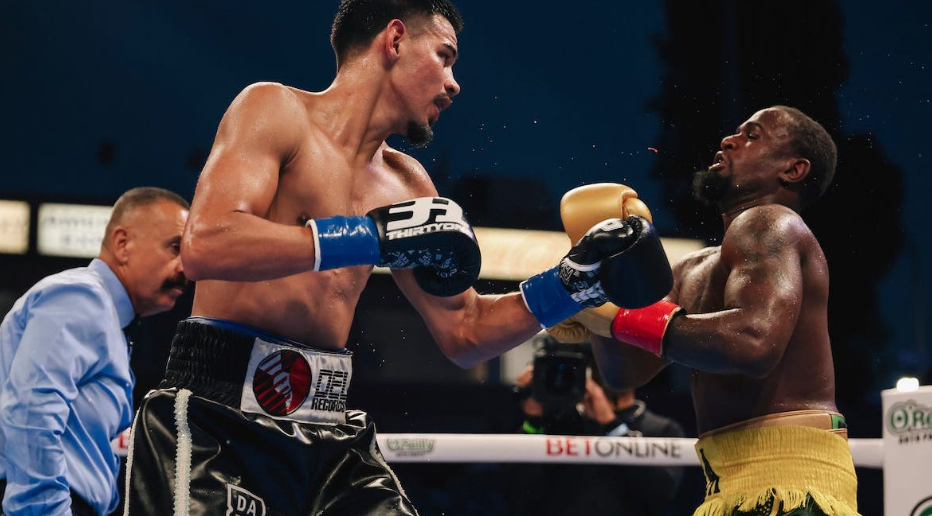
Mercado gets another opportunity to make that argument Saturday night at State Farm Arena in Atlanta, where he will face Emmanuel Tagoe in a 10-round junior welterweight bout on the undercard of Claressa Shields vs. Kaye Scott.
But Mercado is already looking beyond Tagoe.
The target list is ambitious.
Frank Martin and Emiliano Vargas are the biggest names.
Mercado has developed a reputation as one of the more dangerous young punchers in the 140-pound division, yet the biggest names have remained frustratingly difficult to secure.
That disconnect has become one of the central storylines of his rise, a fighter accumulating knockouts and climbing the rankings while struggling to find the opponent capable of turning his potential into a major event.
Mercado offered a brutally simple explanation Thursday during the final press conference.
“Well, nobody wants to get slept. Do you know what I’m saying?”
It is difficult to argue with the logic.
Mercado has made a career out of making opponents regret standing in front of him.
The knockouts have become his calling card, and with every devastating finish, the argument for a bigger opportunity becomes harder to ignore.
Tagoe, however, volunteered.
That is enough for Mercado.
“This guy volunteered, and I’m definitely excited about that. Obviously, we’re looking for bigger and better fights.”
The Ghanaian veteran represents another test, but Mercado is approaching Saturday as if it is less an endpoint than another audition.
He knows what happens if he meets the fans' expectations, and he knows what happens if he lands another spectacular knockout.
The names get louder, and the events only get bigger.
Eventually, someone has to take the risk and jump into the deep water.
Mercado made it clear that he already has two names in mind.
“After this, I’m looking for guys like Emiliano Vargas, Frank Martin. I want to knock all those guys out. Hopefully, with me keeping knocking on the door, I’m able to get those fights.”
There is a natural rivalry with Vargas, whose own ascent has made him one of the more recognizable young names in the junior welterweight division.
Both fighters are young, carrying world title hopes along their journeys.
The pair are trying to force their way toward the upper echelon of 140 pounds.
They understand that at this stage of their careers, a victory over another highly regarded prospect can accelerate the process dramatically.
Martin presents a different proposition.
The Detroit, Michigan, native has already competed on boxing's biggest stages and has championship-level experience.
He represents the type of established name Mercado has been asking for, someone whose reputation would immediately elevate the significance of a victory.
That is the entire point of Mercado chasing these opportunities.
A prospect can knock out journeymen all night and remain a prospect.
Eventually, he needs somebody with a name, somebody with a significant following.
A fighter whose defeat cannot be explained away.
Martin could be that man, but Mercado cannot afford to overlook Tagoe while campaigning for the next opponent.
That is the danger of calling out the future while the present is still standing in front of you.
Tagoe has been around the sport long enough to understand exactly what Mercado is trying to accomplish.
He is walking into Atlanta with the opportunity to derail the conversation completely.
One upset can turn a callout into a footnote, and a knockout can turn it into a demand.
Mercado is promising the latter.
If he delivers, the conversation surrounding his career could change immediately.
A devastating victory over Tagoe would give him another highlight-reel finish and, more importantly, another reason for the division's established names to stop pretending he isn't there.
That is where the “Tito” Mercado story becomes particularly interesting.
He is beyond asking for opportunities from the biggest names in the sport.
Mercado is attempting to make himself impossible to ignore.
Vargas is one option, and Martin is another, both with Top Rank.
Mercado's unwavering goal is to find someone dangerous enough to prove that he belongs among the elite of the 140-pound division.
Saturday night, however, comes first.
Tagoe volunteered for the assignment, and after punching him at today's weigh-ins, Mercado intends to make him regret it.
If another opponent falls asleep under the lights in Atlanta, don't be surprised if the call for Frank Martin gets a whole lot louder.
The main event will feature Claressa Shields defending her WBC and WBA middleweight championships against Kaye Scott this Saturday at State Farm Arena in Atlanta, with the event streaming live on DAZN.
This undercard fight may be another warning shot for the rest of the 140-lb division, and Mercado is planning on making a big splash in Atlanta.


Comments