Joshua Rises From The Canvas to KO Prenga, Spence Retires After UD Loss to Tszyu, Stephen Fulton Weight Debacle, Sultan Zaurbek Feature, Josh Kelly Calls for Boots After Agyarko Win!


Anthony Joshua's return to the ring was expected to be guaranteed fireworks.
Staging a comeback against Albania's Kristian Prenga, the British heavyweight delivered on every promise made before the match.
The packed arena in Jeddah, Saudi Arabia, was eagerly anticipating an epic heavyweight war, but none could have predicted its abrupt end.
Prenga's impressive record, boasting 20 knockout victories, made him a legitimate threat to Joshua, something many pundits and hardcore boxing fans quickly pointed out during the media rollout for the fight.
Joshua took the final step necessary to get to the Tyson Fury showdown, but his performance may have left fans with more questions than answers.
The London native was forced into uncomfortable exchanges multiple times with Prenga.
Despite being perceived as having less experience, Prenga was able to put a feather in his cap by dropping Joshua three times in the first round.
Prenga's ability to work inside the clinch is what ultimately spelled doom for Joshua in the opening round.
In comparison to his younger workhorse days, Joshua is no longer as active as he once was on the inside.
Preferring to jab and utilize his right hand on the outside, gone are the days of the slugger that Joshua reminded fans that he was each night out.
Similar to his previous three contests, Joshua opened the fight with straight punches.
The various offerings of jabs and crosses became predictable to Prenga quickly, which gave him the openings necessary to clinch with his lead hand.
With a touch of old-school heavyweight flair, Prenga lifted Joshua from the canvas with a wonderfully placed rear uppercut in the clinch.
The first knockdown scored in the first 20 seconds of the matchup drew gasps and cheers from the crowd, all while Joshua rolled and rose to his feet.
After circling the ring and readjusting, Joshua was caught once again by Prenga.
This time, the Albanian hopeful dusted Joshua's chin off with two jabs and a cross, a combination that landed with little difficulty.
Joshua’s legs immediately buckled, and he leaned against the ropes before reaching out to hold Prenga for support.
Prenga, recognizing that he had his adversary hurt, attempted to go for the finish.
The crafty veteran in Joshua was able to smother all of the oncoming punches from Prenga, narrowly avoiding danger.
As soon as the referee broke the clinch between the two men, Prenga jumped in for another opportunity to strike.
A lead uppercut landed, followed by a chopping right hand that sent Joshua crashing to the canvas yet again.
Joshua picked himself up from the floor once more, this time with a coy smile that was reminiscent of the one he flashed just before his knockout loss to Andy Ruiz.
These blows were powerful enough to keep Joshua respectful for the rest of the round, with little punch output.
The next round brought more chaos.
After losing his balance and entering many unnecessary clinch exchanges, Joshua opted to step on the gas in round two.
He stepped forward and jabbed, backing Prenga up.
Prenga's guard rose high, and Joshua responded with a left hook that battered the Albanian's gloves.
Another jab sent Prenga into the eastern end of the ring, leaning against the ropes before circling to the south.
Joshua cut the ring off well, which forced Prenga to step to the right.
A jab and a cross quickly detonated from long range, and it became clear that Prenga was hurt.
The crowd livened, the commentators swelled with excitement, and Joshua charged forward to close the show.
Already on unsteady legs, Prenga's chin absorbed another cross, followed by left and right hooks that dropped him directly through the bottom two ropes.
Prenga remained frozen as he attempted to get up, initiating the referee's count.
The crowd knew that it was over.
Joshua scraped himself from the canvas to complete an epic comeback knockout performance.
For all of the questions surrounding Joshua's performance, he still possesses the kind of fight-changing power that has made him one of the most dangerous heavyweights of his generation.
Three knockdowns in the opening round would have finished most fighters.
Against an opponent carrying legitimate punching power and every ounce of momentum imaginable, Joshua somehow found the composure to weather the storm before unleashing one of the most dramatic rallies of his career.
It wasn't simply the knockout that stunned the crowd, it was the resilience, especially considering the circumstances of Joshua's personal life.
Joshua had spent the better part of a year answering questions about his confidence following tragedy, injuries and an inconsistent stretch inside the ring.
Against Prenga, he was forced to answer an entirely different question.
Could he still fight through genuine adversity?
The answer arrived in violent fashion.
Rather than allowing the three knockdowns to dictate the remainder of the contest, Joshua gradually reclaimed the center of the ring, rediscovered his jab and forced Prenga to fight at the champion's preferred distance.
Joshua never truly allowed his wounded opponent an opportunity to recover, stepping in behind fully behind the final combination that detonated squarely on Prenga's chin.
While the cheers rained in through the microphones ringside, Joshua climbed the ropes and roared toward the crowd, equal parts relief and celebration pouring out after one of the wildest victories of his career.
It wasn't the flawless performance many expected against an underdog, but it may have been one of the most memorable.
Heavyweight boxing has always rewarded those capable of surviving chaos.
Joshua survived it better than anyone could have imagined.
The victory officially clears the path toward the long-awaited showdown with Tyson Fury, a fight that has spent years living more as fantasy than reality.
Fury fulfilled his obligation days earlier by stopping veteran Mariusz Wach in Thailand, as covered here on DQ w/ Damani's previous edition.
Joshua has now done the same, albeit in infinitely more dramatic fashion.
The "Battle of Britain" is finally within touching distance.
If Saturday proved anything, however, it is that Joshua enters that showdown with vulnerabilities Fury undoubtedly noticed.
Being dropped three times by Kristian Prenga will not be overlooked by the former Lineal/Ring Magazine heavyweight champion, whose movement, feints and ring IQ present entirely different challenges than the aggressive Albanian offered.
Fury has built an illustrious career exposing defensive lapses far smaller than the ones Joshua displayed in the opening round.
Those questions will linger throughout training camp, in addition to the answers Joshua provided.
While Fury now knows Joshua can still be hurt, he was also reminded of something equally important.
Anthony Joshua can still end a fight with a single combination.
Later this year, British boxing will finally receive the heavyweight collision it has demanded for over a decade.
Saturday night ensured that both men will arrive with momentum.
Whether Joshua's unforgettable comeback was the beginning of one final championship run or merely the calm before Tyson Fury delivers his own statement remains to be seen.
After surviving the brink of disaster in Jeddah, the road to Fury has never been more dramatic for Anthony Joshua.
[Tim Tszyu Retires Errol Spence Jr. After UD Win, Middleweight Run Next?]

There are nights in boxing when the scorecards become secondary.
When victory feels bittersweet, defeat feels inevitable, and every punch serves as another reminder that time remains undefeated.
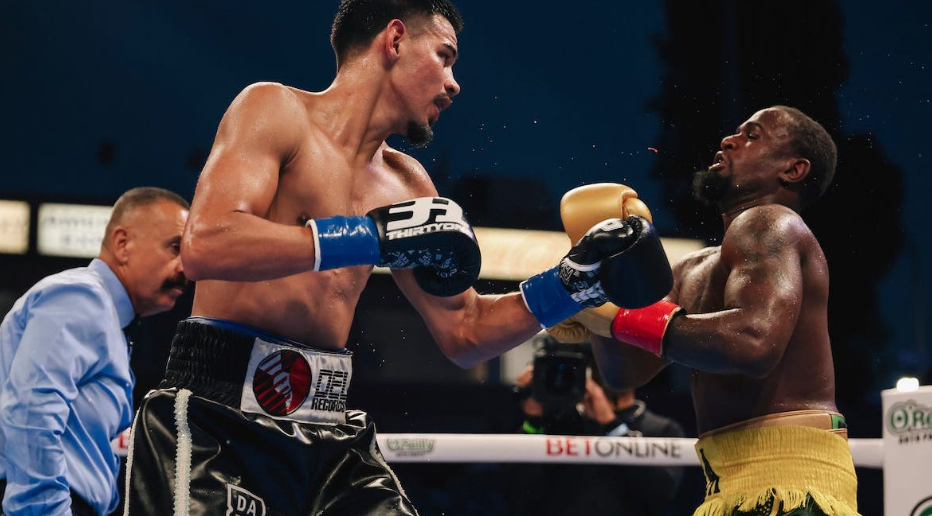
Tim Tszyu earned the unanimous decision Sunday in Sydney, Australia, but the story that unfolded over 12 emotionally exhausting rounds reached far beyond the judges' scorecards.
It was a meeting between two fighters desperately chasing one final run toward boxing's summit, only for one of them to discover that the mountain had grown too steep to climb.
The defeat of Errol Spence Jr. may have marked the closing chapter of one of the finest careers of the modern era.
The former unified welterweight champion entered the bout insisting he still had something left to prove after three years away from the ring.
New trainer Ronnie Shields had revealed during fight week that Spence intended to retire should he lose.
As the final bell echoed through Qudos Bank Arena, that possibility suddenly felt less like a promise and more like an acceptance of reality.
During a sit-down interview with the former champ, Andre Ward asked Spence why he was still fighting.
“Uh,” Spence said, scratching his head. “Let me see.”
He didn't pause for long before eventually giving an answer, but even that brief hesitation felt telling.
If this truly was the end, boxing said goodbye to a champion who once embodied relentless excellence.
There was a time when few fighters in the sport could match Spence's suffocating style.
His greatness never relied on one-punch knockout power or dazzling athleticism.
Instead, it was built upon an endless engine, a piston-like jab, and an almost mechanical ability to break opponents down through sustained pressure. Every round became a test of endurance.
Every exchange favored Spence because he refused to stop working.
At every opportunity possible, Spence let his hands go with little care of what came back.
That fighter never fully appeared in Australia.
Whether the miles accumulated from a decade at the elite level, the horrific Ferrari crashes that nearly claimed his life.
This detached retina temporarily halted his career, the punishment absorbed against Terence Crawford, or simply Father Time himself, the version of Spence who once terrorized the welterweight division felt like a distant memory.
While his spirit remained, his legs did not.
From the opening moments, there were signs that something was missing.
Spence fought with intelligence, slipping in straight left hands and occasionally digging to the body, but he rarely established the suffocating pressure that once defined him.
Instead of cutting off the ring, he often found himself retreating.
Instead of dictating exchanges, he reacted to them.
His balance looked unsteady almost immediately.
Spence's left leg seemed to buckle slightly with every step.
Several times during the opening rounds, Spence leaned awkwardly over his right foot after throwing combinations, forcing himself to reset before continuing.
It wasn't dramatic enough to produce any knockdowns, but it was impossible to ignore.
This was not the same Errol Spence Jr.
Regardless of Spence's advanced age, credit belongs equally to Tim Tszyu.
The Australian entered the fight carrying his own emotional baggage.
Just two years removed from appearing destined to become the face of the junior middleweight division, Tszyu had endured one of the sport's cruelest stretches.
A gruesome cut against Sebastian Fundora cost him a world title despite producing one of boxing's bravest performances.
A devastating knockout loss to Bakhram Murtazaliev followed.
Even his rematch with Fundora ended in disappointment, finishing with yet another knockout loss to the giant.
The fighter once known as "The Soul Taker" had reintroduced himself to the boxing world as "The Phoenix."
He arrived in Sydney attempting to prove he could rise once again.
Like Spence, Tszyu no longer resembled the reckless destroyer who overwhelmed opponents with constant aggression.
His attack was more measured, his pressure more calculated. Gone were the wild combinations that had defined his rise through the rankings.
Experience, and perhaps the scars of recent defeats, had reshaped him into a more patient fighter.
The opening five rounds reflected those shared realities.
Neither man looked entirely comfortable in the ring.
Neither man appeared capable of sustaining the furious pace that once came naturally.
Instead, they fought like veterans carrying invisible weight, searching for openings while carefully managing what remained in their tanks.
The result was fascinating.
Every clean punch landed with consequence because neither fighter possessed the luxury of wasting energy.
Gradually, however, the tide began to shift.
Tszyu started investing heavily downstairs, repeatedly targeting Spence's body with thudding hooks that slowly robbed the American of what little mobility remained.
The cumulative effect became increasingly obvious as the fight entered the second half.
Spence continued firing back.
He never stopped going for the knockout despite his power being sapped, and all of his offensive work was driven with real purpose, true fire that only a former unified champion could have in his heart.
He simply couldn't sustain the pace.
By the championship rounds, Tszyu was controlling the geography of the fight.
The Australian stalked forward behind steady pressure, forcing Spence backward while limiting his opportunities to establish offense.
Every attempt by Spence to regain momentum was answered with another body shot, another right hand, another reminder that youth and activity often become the deciding factors when elite fighters meet beyond their primes.
What made the performance so difficult to watch wasn't the punishment itself; it was the determination with which Spence accepted it.
Round after round, he answered the bell despite knowing the fight was slipping away.
His corner encouraged him.
The crowd applauded him.
Still, he kept walking forward.
The defining sequence came late in the fight when Tszyu landed a crushing straight right hand that sent Spence ricocheting off the ropes before stumbling back toward center ring.
Earlier in his career, that moment may have sparked a furious rally.
Instead, Spence simply gathered himself and continued, fighting behind the jab while he darted in.
His body no longer obeyed the commands his heart continued issuing.
As the final round approached, television cameras lingered on Spence seated in his corner.
His expression said everything.
He wasn't frightened, discouraged, or spiritless.
He looked ready to go one more round, but there was a certain pain in his eyes.
Not merely from the previous 11 rounds, but from the years that preceded them.
From the crash, from the surgeries, even from the Crawford defeat.
From the endless rehabilitation required to convince himself another championship run remained possible.
He answered the final bell and stood tall against the younger Australian.
When the scorecards were announced, Tszyu earned a clear unanimous decision, resurrecting his own career in the process.
For the Australian, victory immediately reopens conversations surrounding the biggest names at middleweight and junior middleweight.
Potential clashes with Vergil Ortiz Jr., Sebastian Fundora, Jaron "Boots" Ennis or even another world title opportunity suddenly feel realistic again.
A run at middleweight means names like Denzel Bentley, Erislandy Lara, Amari Jones, Aaron McKenna, and Yoenli Hernandez.
His journey, once teetering on the brink, has found new life.
Afterward, the tension that fueled fight week disappeared almost instantly.
During fight week, Tszyu initially made a horrifying declaration.
"I'm coming for every limb..." The Australian smiled to the camera. "Especially that retina."
The remark, referencing Spence's detached retina suffered in 2021, irked the former champion enough that he refused to shake Tszyu's hand during the pre-fight festivities.
Tszyu had spent days provoking Spence, even referencing the eye injury that nearly ended the American's career.
The comments created genuine hostility between the two, with Spence refusing to shake his opponent's hand during the ceremonial events.
But boxing has a way of stripping away pride once the violence ends.
When the final bell rang, the two men embraced.
They shook hands, and together they posed together for photographs.
It wasn't celebration; it was recognition.
Each understood exactly what the other had sacrificed simply to stand inside that ring.
Perhaps that's why this fight resonated so deeply.
It wasn't a clash between two fighters at their physical peaks.
It was something far more human.
Two former warriors, battered by defeats, injuries and time itself, searching for one final glimpse of greatness.
Tszyu found enough to keep dreaming.
Spence found enough to remind the boxing world why he was once among its very best.
If this truly was the final fight of Errol Spence Jr.'s remarkable career, he leaves the sport not as the unstoppable champion who unified the welterweight division, but as something perhaps even more admirable.
Errol Spence Jr., forever a New York-native turned Texas hopeful, and a proud fighter who gave every ounce of himself until there was simply nothing left to give.
[Stephen Fulton Fumbles Australia Opportunity - Misses Weight Egregiously!]

Stephen Fulton Jr.'s long-awaited return to the ring was supposed to mark the beginning of another climb toward championship contention.
Instead, it ended before the opening bell.
In one of the most disappointing developments of fight week, Fulton's scheduled bout against Australia's Liam Wilson was canceled after the former two-division world champion failed to make weight by a staggering margin, delivering another damaging blow to an already depleted Tim Tszyu-Errol Spence Jr. pay-per-view card in Sydney.
For Wilson, it was a heartbreaking conclusion to weeks of preparation.
For Fulton, it may have been the moment that permanently altered how promoters view his future.
The Philadelphia native stepped onto the scales Friday at 139.5 pounds, an astonishing 6.5 pounds above the revised 133-pound catchweight that had already been granted at his own request earlier in the week.
Originally announced as a WBA super-featherweight title eliminator at 130 pounds, the contest had already been compromised once before either fighter arrived in Australia.
It never made it to the ring.
The cancellation represented the latest setback for a card that had already lost one of its marquee attractions when Jermall Charlo's scheduled bout with Koen Mazoudier fell apart after visa complications prevented Charlo from entering Australia.
Fulton and Wilson had been elevated into the co-main event slot, entrusted with helping carry one of the biggest boxing events of the year.
Instead, the spotlight shifted from championship implications to professional accountability.
Wilson had done everything asked of him.
The Queensland native completed his training camp, traveled, made weight and stood ready to fight one of the most accomplished opponents of his career.
After challenging Emanuel Navarrete for a world title and continuing to rebuild his standing in the division, Saturday represented an opportunity to earn the signature victory that could have reignited his championship aspirations.
That opportunity disappeared on the scales.
His manager, Glenn Jennings, didn't hide his frustration.
"This feels like an absolute stitch-up. We sign a contract at 130, there's an expectation you will deliver. It's totally unacceptable and a blight on the sport. This is unprofessional. There's nowhere to go for this bloke now."
The comments reflected the disappointment felt throughout the boxing community.
Making weight is one of the sport's oldest obligations.
Fighters can lose rounds, lose decisions and lose championships, but showing up prepared to compete at the contracted weight remains among boxing's most fundamental responsibilities.
When that obligation isn't met, it isn't merely an inconvenience; it completely jeopardizes months of preparation for both athletes.
Fulton accepted responsibility almost immediately, taking to Twitter to release a statement on the matter.
Hours after the cancellation became official, he addressed the criticism on social media, insisting he had never traveled across the world intending to miss weight.
"Why would I fly all the way to Australia with no intentions to make weight? Is it my fault? Yes, and I take accountability, but I gave it my all. Once I got to 138, I wasn't sweating anymore. I thought and believed I could make the weight."
Whether fans choose to accept the explanation is another matter entirely.
Weight cuts have ended careers before, and there is little reason to doubt Fulton genuinely struggled during the final stages of the process.
Fighters routinely describe their bodies simply refusing to cooperate after years of draining themselves to reach increasingly difficult weight limits.
But intent is only part of the conversation.
Reliability matters just as much.
This marks the second consecutive fight in which Fulton has failed to make weight.
Last December, he arrived two pounds heavy for his scheduled junior lightweight championship bout against O'Shaquie Foster.
Rather than scrapping the contest, officials restructured it as a WBC Interim Lightweight World title fight, and Fulton went on to lose a unanimous decision in a performance that suggested his body was already telling him what the scales confirmed.
Now, less than a year later, the problem has become impossible to dismiss as an isolated incident.
Twice can become a pattern, and patterns make promoters nervous.
Boxing has always been forgiving.
Fighters have returned from failed drug tests, ugly defeats, legal troubles and promotional disputes to headline major events again.
The sport has rarely been known for holding grudges.
Repeatedly missing weight, however, presents a different kind of problem.
It isn't merely about public perception; it is wholly a logistical risk.
Every promoter investing millions into an event expects confidence that both fighters will actually make it to fight night.
Television schedules, sponsorship obligations, ticket sales and pay-per-view marketing all depend on those bouts remaining intact.
When a fighter develops a reputation for missing weight, every future booking becomes a gamble.
Saturday's cancellation served as a painful reminder of exactly that.
Wilson leaves Sydney without the career-defining opportunity he earned.
Fans lose one of the evening's marquee attractions.
The pay-per-view card, already weakened by Charlo's withdrawal, suddenly felt noticeably thinner beneath the main event.
No one benefited but the local Australians like Callum Peters.
Perhaps the biggest question now centers on Fulton's future.
At 30 years old, the former unified super-bantamweight champion has accomplished more than most fighters ever dream of achieving.
He outboxed Brandon Figueroa to unify the WBO, WBC, and IBO world titles, stood atop two weight classes, and established himself among boxing's elite technicians during his prime.
Yet careers are often remembered as much for their final chapters as their greatest triumphs.
If cutting weight has become this physically taxing, the answer may no longer be asking his body to do what it simply cannot.
The move to lightweight, or even beyond, may no longer be a choice.
It may be a necessity.
Until that decision is made, however, difficult questions will continue following every contract Fulton signs.
Not because anyone doubts his talent, but because boxing first has to believe he'll make it to the opening bell.
[Sultan Zaurbek - Boogeyman, Or Big Fish in Little Pond?]

There is perhaps no more overused word in modern boxing than "boogeyman."
Every few years, a fighter emerges from the shadows carrying a frightening knockout percentage, stories of brutal sparring sessions, and whispers from insiders insisting no champion wants anything to do with him.
Fans begin demanding opportunities that never seem to materialize.
Promoters speak cautiously.
Opponents are accused of ducking him.
The myth grows larger than the résumé.
For Kazakhstan's Sultan Zaurbek, that mythology has arrived.
The undefeated super-featherweight from Shymkent has steadily built a reputation as one of boxing's most avoided contenders, with many supporters believing the division's elite have little interest in sharing a ring with a fighter viewed as all risk and very little reward.
Despite appearing on high-profile ProBox TV cards, and being scheduled to appear yesterday on a Pathway Promotions card in Australia, many fans can't shake the feeling that Zaurbek needs the big fights to get ahead.
At 29 years old, Zaurbek has patiently climbed the rankings while waiting for the world title opportunity many believe he has already earned.
Whether that opportunity has been delayed because champions genuinely fear him, or because boxing politics have simply gotten in the way, remains open for debate.
What isn't debatable is the label increasingly attached to his name.
The boogeyman.
In boxing, the term carries a very specific meaning.
A true boogeyman isn't necessarily the division's best fighter.
Rather, he is the dangerous contender who threatens everything while offering champions very little in return.
He is the high-risk, low-reward opponent capable of derailing million-dollar plans with one upset victory.
His value lies less in championship belts than in the fear he creates.
Historically, those reputations have been built on frightening knockout power, relentless pressure and an almost mythical ability to physically overwhelm opponents.
The problem is that boxing history is littered with boogeymen who eventually ran into reality.
For years, Subriel Matías carried one of the sport's most intimidating reputations.
His crushing body attack and suffocating pressure convinced many observers that few junior welterweights could survive 12 rounds with him.
Matías' boogeyman title was finally earned when he took the life of Maxim Dadashev in a freak knockout in 2019.
Then came Liam Paro, who neutralized Matías with disciplined boxing and walked away with the IBF championship, exposing vulnerabilities that had largely gone unnoticed.
After the painful loss to Paro, Matías was knocked out badly by Dalton Smith earlier this year.
Karen Chukhadzhian developed a different kind of mystique.
The Ukrainian wasn't viewed as an explosive knockout artist, but rather as an exceptionally awkward technician whose style promised endless frustration for any elite welterweight.
Yet when opportunities finally arrived against world-class opposition such as Boots Ennis and Paddy Donovan, Chukhadzhian repeatedly fell short on the scorecards despite proving himself competitive.
Bakhram Murtazaliev inspired perhaps the loudest whispers of all.
The Russian junior middleweight spent years developing a reputation as one of boxing's hidden monsters before finally capturing a world title.
His destruction of Tim Tszyu only amplified those fears, convincing many that a lengthy and dominant championship reign was inevitable.
Then, Josh Kelly dismantled him.
Rather than confirming the legend, Kelly exposed Murtazaliev's defensive limitations and claimed the IBF title in emphatic fashion, abruptly ending one of boxing's fastest-growing myths.
Shakhram Giyasov followed a similar trajectory.
Long viewed as one of the welterweight division's most dangerous contenders, the decorated Uzbek amateur accumulated victories while fans demanded bigger opportunities.
But questions surrounding how his style would translate against elite competition never completely disappeared, and he found his chin destroyed by Jack Catterall during their 12-round clash for the WBA World Championship.
Even Jaime Munguía found himself trapped by the same phenomenon.
For years, the Mexican's relentless aggression and offensive volume produced highlight-reel knockouts and convinced many that he would eventually overwhelm anyone placed in front of him.
Those expectations faded dramatically following comprehensive defeats against elite opposition, including devastating setbacks that forced many to reconsider whether hype had outpaced substance.
The pattern repeats itself across generations.
Reputation grows, Expectations explode, but reality eventually arrives.
That doesn't mean every so-called boogeyman is fraudulent.
Far from it.
Many earn the label because they genuinely possess extraordinary talent.
The danger comes when fans begin confusing promotional mythology with proven greatness.
That brings the conversation back to Sultan Zaurbek, who is waiting on the sidelines for his turn to make his case to the world.
Unlike several of the names before him, Zaurbek has yet to receive the defining opportunity capable of answering the questions surrounding his ceiling.
His professional résumé continues growing, his ranking continues improving, and his supporters continue insisting the division's biggest names are deliberately looking elsewhere.
There are legitimate reasons for that belief.
The combination of a Southpaw with excellent footwork and sharp combination punching spells immediate, unyielding doom.
Tack on to that a disciplined amateur foundation shaped by Kazakhstan's renowned boxing system.
Unlike the stereotypical "boogeyman," Zaurbek doesn't rely exclusively on frightening knockout power.
Instead, he overwhelms opponents through intelligent pressure, sustained offensive output and technical precision.
He controls distance well, works behind an educated jab and rarely allows opponents prolonged moments of comfort.
Those attributes make him dangerous, and very clearly a hazard for investment.
Whether they make him avoided is more difficult to prove.
Professional boxing has never been governed solely by competitive merit.
Champions frequently pursue financially rewarding fights before mandatory obligations.
Television contracts, promotional relationships and sanctioning body politics often dictate matchmaking as much as rankings themselves.
Being overlooked doesn't automatically mean a fighter is feared.
Sometimes it simply means he isn't yet commercially valuable enough.
Still, dismissing Zaurbek would be equally shortsighted.
The Kazakh contender has continued winning while patiently waiting for opportunities many fighters in his position never receive.
Rather than demanding shortcuts, he has steadily climbed through the rankings, trusting that consistent performances would eventually force the division to acknowledge him.
That patience may soon be rewarded.
The super-featherweight division continues evolving as champions explore opportunities across multiple sanctioning bodies, creating openings for highly ranked contenders to finally receive long-awaited title shots.
If Zaurbek's opportunity arrives, he won't merely be fighting for a championship; he'll be fighting to validate years of speculation.
Because until he shares the ring with an established world champion, every discussion surrounding Sultan Zaurbek remains rooted in possibility rather than proof.
That distinction matters.
Boxing fans love creating monsters.
Sometimes those monsters become legends.
Other times they become cautionary tales.
The sport has already watched supposedly untouchable names like Subriel Matías, Bakhram Murtazaliev and Jaime Munguía discover that reputation alone cannot survive the elite level forever.
Each entered major fights carrying an aura of invincibility.
Each eventually learned that boxing has a remarkable way of exposing every unanswered question that the fans have.
Sultan Zaurbek now stands at that same crossroads.
Perhaps he truly is the avoided force many believe him to be, a championship-caliber fighter whose combination of skill and danger has made promoters reluctant to risk their stars.
Or perhaps, he is the latest name elevated by boxing's favorite tradition: turning promising contenders into mythical figures before they have the chance to prove themselves.
The only way to separate legend from reality is the one thing Zaurbek has been seeking all along.
A true world title fight.
Not a fight for a vacant title against a no-name opponent pulled from the rafters, a world title fight against a current champion.
Until then, the most dangerous thing about Sultan Zaurbek may not be his left hand or his pressure.
It may be the mystery that still surrounds him.
[Josh Kelly Bruised and Bloodied, Bests Agyarko to Advance to Potential "Boots" Unification!]

When Josh Kelly flattened Bakhram Murtazaliev to capture the IBF junior middleweight championship, the immediate conversation centered around one question.
Who would he unify with first?
Names like Jaron "Boots" Ennis, Sebastian Fundora and the division's other champions immediately dominated the discussion.
Instead, Kelly chose a different path, accepting a mandatory title defense against the unbeaten Caoimhin Agyarko on one of boxing's biggest stages in Jeddah, Saudi Arabia.
It wasn't the blockbuster many hoped for, but it was an opportunity too significant to decline.
By the end of 12 bruising rounds Saturday night, Kelly had successfully defended his world championship.
He also reminded the boxing world that mandatory challengers rarely arrive to simply make up the numbers.
Kelly retained his IBF title with a hard-earned unanimous decision over the previously unbeaten Irishman, earning scores of 114-113, 115-112 and 115-112 in a contest that became increasingly physical as the championship rounds approached.
It wasn't the dominant performance many expected from the champion following his destructive victory over Murtazaliev, but it was the type of gritty, resilient display that often defines championship reigns.
Sometimes, defending the throne proves every bit as difficult as winning it.
Agyarko arrived in Saudi Arabia carrying an undefeated record but very little public expectation.
Overshadowed by Kelly's growing momentum and the possibility of future unification bouts, the Belfast native embraced the opportunity to disrupt the division before it could move on without him.
He nearly succeeded.
The opening rounds unfolded exactly as many anticipated.
Kelly's superior timing, footwork and shot selection immediately established control.
Working comfortably behind his jab, the champion dictated range while forcing Agyarko to spend much of the early fight chasing him around the ring.
Kelly's confidence was evident as he mixed sharp combinations with subtle defensive movement, looking every bit like the fighter who dismantled one of the division's most feared punchers only months earlier.
Agyarko remained patient.
Rather than recklessly forcing exchanges, the challenger absorbed information during the opening rounds, searching for opportunities to gradually increase the pressure without abandoning his game plan.
That patience began paying dividends in the fifth.
Kelly emerged looking to accelerate the pace, finally sitting down on combinations that had previously been thrown more conservatively.
Instead of wilting under the champion's offense, Agyarko welcomed the exchanges, firing back with combinations of his own and refusing to surrender the center of the ring.
For the first time all night, Kelly was forced to work.
The fight suddenly changed complexion.
Momentum continued shifting in the sixth round when referee intervention added another wrinkle to the contest.
Kelly repeatedly allowed punches to stray behind Agyarko's head during close-range exchanges, eventually prompting the official to deduct a point from the champion.
The penalty appeared to ignite the challenger.
Sensing an opportunity, Agyarko pressed forward with renewed confidence, throwing combinations in bunches while attempting to disrupt Kelly's rhythm.
Although his overall output still lagged behind the champion's, the quality of his work improved dramatically as the middle rounds unfolded.
Kelly, meanwhile, appeared to lose some of the fluidity that had carried him through the opening stages.
The champion's output dipped.
The exchanges grew messier.
The fight became increasingly physical.
By the ninth round, the punishment had begun leaving visible reminders.
Cuts opened beneath both of Kelly's eyes, while a deep wound across the bridge of his nose poured blood for the remainder of the contest.
Every exchange seemed to produce another crimson streak running down the champion's face, transforming what began as a technical boxing match into a battle of grit and endurance.
Champions often reveal their character once comfort disappears.
Kelly answered.
Rather than allowing the blood or Agyarko's growing confidence to dictate the final rounds, the champion made the necessary adjustments.
He returned to the body, slowing the challenger's forward momentum before reintroducing one of his most effective weapons, the uppercut.
The punch repeatedly split Agyarko's guard during the championship rounds.
Kelly landed it cleanly in the 10th before doubling down on the attack in the 11th, reminding everyone inside the arena why he entered the night as the defending world champion.
Although Agyarko refused to fold, he struggled to consistently answer Kelly's sharper, more accurate offense whenever the champion found his rhythm.
Still, the challenger never stopped trying to drop Kelly.
Every round became a battle.
Every exchange carried consequence.
Even with blood streaming from his face, Kelly continued marching forward, determined to remove any doubt before the final bell.
When the scorecards were finally read, relief mixed with satisfaction.
Kelly had survived his first title defense.
Now he demanded more, clearly fancying himself against the elites of super-welterweight.
"I want it next. People will be smiling looking at that saying: 'What's he talking about?' ... That's a tricky night for anyone [against Agyarko]."
The champion wasn't finished.
"I want the big names in the division. I've already taken out one name in Bakhram Murtazaliev... let me get the other ones. I'm here, man. I'm a champion. I'm IBF [champion], and I've just defended."
The target is obvious.
Unified champion Jaron "Boots" Ennis sits atop the division as one of boxing's fastest-rising stars after moving through the weight classes and collecting world championships with remarkable efficiency.
A clash between Ennis and Kelly would immediately become one of the sport's premier matchups, pairing two of the division's most gifted technicians with three world titles at stake.
Even promoter Eddie Hearn believes the timing is right.
Representing both fighters places Hearn in the unique position of potentially making one of boxing's biggest fights without promotional politics standing in the way.
"He's had a defence of the title, and before that mandatory comes again, really you want to be looking at those big money fights and trying to roll the dice."
Hearn continued outlining what he believes should come next.
"I think that comes with 'Boots' Ennis. If I'm Josh Kelly, I'm looking at the big payday out in America against 'Boots' Ennis. It's a three-belt unification fight. Sebastian Fundora, all those guys."
Before any contracts are signed, Kelly will likely spend time recovering from one of the toughest nights of his championship career.
The cuts across his face told only part of the story.
Agyarko forced the champion into uncomfortable exchanges, tested his resolve and proved exactly why undefeated challengers should never be overlooked.
Although he left Saudi Arabia without the championship, he emerged with considerably more respect than he carried into the arena.
Kelly, meanwhile, accomplished the task champions are ultimately judged by.
He defended.
It may not have been the emphatic statement many envisioned when the fight was announced, but mandatory defenses are rarely designed to create headlines.
They are designed to preserve championships while exposing weaknesses that future opponents may attempt to exploit.
Kelly passed the test, though he paid the price with several lacerations to the face.
Now, with his first successful title defense complete and the mandatory obligation behind him, the conversations that began after the Murtazaliev victory can finally resume.
The names are bigger, the stakes are higher, and the purses keep getting larger.
If Josh Kelly gets his wish, the next chapter of his championship reign won't be another defense.
It will be a unification fight against one of boxing's very best young talents.
[Giovanni Santillan vs. Abass Baraou Announced for Sept. 12th on ProBoxTV!]

Another high-stakes crossroads fight has officially been added to ProBox TV's September schedule, with more fights to be announced for this card.
Giovanni Santillan will return to Southern California on Sept. 11, headlining a ProBox TV card against former WBA junior middleweight champion Abass Baraou in a 10-round main event at Frontwave Arena in Oceanside, California.
For both fighters, the matchup represents an opportunity to reignite stalled title aspirations.
Santillan, the San Diego native, enters the contest riding the momentum of a three-fight winning streak since suffering the lone defeat of his professional career against Brian Norman Jr. in May 2024.
The devastating knockout loss cost Santillan the interim WBO welterweight championship and brought extensive humiliation, but the 35-1 southpaw has quietly rebuilt his standing, climbing back into title contention with the WBO ranking him No. 8 at welterweight while also holding the No. 12 position with the IBF at junior middleweight.
Now, he returns home with another chance to prove he belongs among boxing's elite.
Standing across the ring will be one of Europe's most accomplished contenders.
Berlin's Abass Baraou enters with a 17-2 record after falling short in his bid to unify the WBA and WBO junior middleweight championships against Xander Zayas earlier this year in Puerto Rico.
Despite the split-decision defeat, Baraou remains highly regarded, carrying top-12 rankings with the WBA, WBO and WBC while seeking to immediately reinsert himself into the championship conversation.
The bout offers both men a familiar proposition.
Win, and another world title opportunity likely follows.
Lose, and the road back becomes significantly longer.
The card also features former IBF featherweight world champion Luis Alberto "Venado" Lopez making his ProBox Promotions debut against fellow Mexican contender Daniel "Caballo" Lugo.
Lopez continues rebuilding after surrendering his world championship to Angelo Leo in 2024 and will look to move one step closer toward another title opportunity.
One of the evening's most compelling matchups comes in the chief supporting bout, where unbeaten junior lightweights Dominic Valle and Francois Scarboro Jr. meet with undefeated records on the line.
Someone's perfect professional start will come to an end when two of the division's rising prospects collide.
[MVP Signs Skye Nicholson via MVP x Matchroom Co-Promotion!]

For years, boxing fans believed promotional walls were permanent.
If a fighter signed with one of the sport's major promotional companies, opportunities with rival outfits often became complicated negotiations filled with competing television contracts, conflicting business interests and endless politics.
Those barriers have prevented countless superfights from becoming reality.
Skye Nicolson may have just helped tear one of those walls down.
In one of the most significant business developments women's boxing has seen in recent memory, Most Valuable Promotions officially announced the signing of Australia's Skye Nicolson as part of a groundbreaking co-promotional agreement with Matchroom Boxing, making the reigning WBC super bantamweight world champion the first fighter to compete under the new strategic alliance between the two promotional powerhouses.
The move represents far more than another promotional signing.
It is a statement about where women's boxing is heading.
For decades, promotional rivalries have often restricted the biggest fights in the sport.
While occasional partnerships have materialized for blockbuster events, long-term cooperation has remained exceedingly rare.
Nicolson's agreement signals something different, a willingness from two of boxing's most influential companies to prioritize opportunities over exclusivity.
If successful, the partnership could fundamentally reshape how elite women's boxing is promoted.
Nicolson now finds herself at the center of that experiment.
The 30-year-old Australian will make her official MVP debut on Aug. 29 in Birmingham, England, defending her WBC super bantamweight championship against Japan's three-division standout Miyo Yoshida on the MVPW-06 card.
The event will air on Sky Sports in the United Kingdom and ESPN+ in the United States, immediately placing Nicolson before one of the largest international audiences of her professional career.
The matchup itself carries considerable intrigue.
Yoshida enters with championship pedigree rarely matched anywhere in women's boxing.
A former IBF bantamweight champion and two-time WBO junior bantamweight titleholder, the Japanese veteran has spent years proving herself against elite opposition before relocating to New York to train at the legendary Gleason's Gym.
Known throughout Japan as a scrappy fighter who's never been knocked out, Yoshida has built a career around resilience.
Now she has another opportunity to shock the boxing world.
"I know many see Skye as the favorite and I understand why, she is an excellent fighter. But I have dedicated my life to boxing, and I will bring the heart of Japan and my experience as a three-time world champion. On August 29, the world will see me crowned as the new WBC Super Bantamweight World Champion."
Standing opposite her is one of women's boxing's fastest-rising stars.
Since representing Australia at the Tokyo Olympics, Nicolson has steadily developed into one of the sport's premier technicians.
Her slick footwork, disciplined southpaw jab and defensive awareness carried her to the WBC featherweight championship before she successfully moved to super bantamweight, where she was elevated to full world champion earlier this year after previously holding the interim title.
The move up in weight has only expanded her ambitions.
Nicolson has made little secret of her desire to unify the division while helping push women's boxing further into the mainstream.
"Women's boxing is entering a new era and I want to be right at the center of it. This partnership with MVP and Matchroom gives me the opportunity to chase legacy, compete against the very best, and keep pushing our sport forward."
Those words perfectly capture why this agreement feels so significant.
Most promotional announcements focus almost exclusively on contracts.
This one focuses on possibilities.
Jake Paul and Nakisa Bidarian have transformed MVP into arguably the most aggressive promoter in women's boxing, assembling a roster headlined by world champions while consistently delivering all-female cards that have drawn worldwide attention.
Rather than treating women's boxing as an undercard attraction, MVP has built entire events around its female stars.
Adding Nicolson to that vision only strengthens the company's position.
The promotion's founders made their intentions clear.
"Skye represents the exact caliber of athlete we are building MVP around. She is a two-division world champion, a Commonwealth Games gold medalist, and one of Australia's biggest stars. We are thrilled to help create the defining moments of her career, starting with this title defense against Miyo Yoshida."
For Matchroom Boxing, the agreement is equally fascinating.
Rather than losing one of its premier champions, Eddie Hearn's company gains another promotional avenue through which Nicolson can continue building her global profile.
Instead of choosing between competing interests, both organizations appear committed to working together, a concept that has often felt foreign in professional boxing.
Perhaps the biggest winner is the sport itself.
Should Nicolson successfully defend her championship against Yoshida, the partnership immediately unlocks a host of compelling matchups against several of MVP's established super-bantamweight contenders and champions, and beyond.
Fights that previously may have required lengthy negotiations suddenly become far easier to make under one promotional umbrella.
That has been the greatest criticism of boxing for generations.
The best fighters too often struggle to face one another because of business.
This agreement attempts to solve that problem before it ever begins.
Whether it becomes the blueprint for future partnerships remains to be seen.
Promotional alliances have come and gone throughout boxing history, many collapsing under the weight of competing financial interests.
Sustaining cooperation over multiple events presents challenges far greater than announcing a single fighter signing.
But someone had to cross the bridge first, and Skye Nicolson has become that fighter.
In doing so, she may have accomplished something even more important than winning another world championship.
She may have helped prove that boxing's promotional boundaries are no longer as permanent as they once seemed.


Comments