Fabio Wardley Falls Short Against Daniel Dubois, David Morrell Receives First KO Loss, Ray Ford vs. O'Shaquie Foster Heats Up, Keyshawn Davis Fight Undercooked for 5/16?


Daniel Dubois completed the latest chapter of his remarkable resurrection Saturday night, stopping Fabio Wardley in the 11th round of a savage, blood-soaked heavyweight war to capture the WBO heavyweight championship at Manchester’s Co-Op Live Arena.
What unfolded was less a traditional title fight and more an act of survival.
By the time referee Howard Foster finally intervened 28 seconds into Round 11, his pale blue officiating shirt had turned crimson from the punishment both men absorbed throughout one of the year’s most violent contests.
Wardley, staggering backward with blood pouring endlessly from a shattered nose and cuts spread across his face, could no longer intelligently defend himself as Dubois unloaded another barrage near the ropes.
The stoppage felt merciful.
Wardley protested briefly through the blood and exhaustion, but the punishment had become impossible to ignore.
Ringside physicians had already examined him multiple times as concern grew throughout the later rounds.
Even with his face destroyed and his balance compromised, Wardley somehow continued firing back, drawing roars from a Manchester crowd increasingly torn between admiration and genuine fear for his safety.
Perhaps that refusal to surrender ultimately defined the fight as much as Dubois’ victory itself.
“Fabio Wardley’s chin deserves a knighthood,” former world champion Darren Barker remarked on commentary as the champion stumbled repeatedly into danger while still attempting to answer Dubois’ assaults.
Carl Frampton described the spectacle as “sickening” to watch late, reflecting a growing sentiment that the fight may have continued longer than necessary.
Yet, for all the carnage, the fight somehow began with even greater chaos.
Only 10 seconds into the opening round, Wardley detonated a right hand that dropped Dubois heavily to the canvas, instantly igniting the arena.
The early knockdown appeared to validate concerns that still linger around Dubois despite his recent resurgence.
Questions surrounding his durability and fighting spirit have followed him throughout his career, particularly after stoppage defeats to Joe Joyce and Oleksandr Usyk.
Those questions looked ready to consume him again.
Then Dubois responded.
The challenger rose calmly, steadied himself, and immediately began marching forward behind his jab.
By Round 3, Wardley scored another knockdown during a furious exchange, seemingly placing himself firmly in control of the fight.
But Dubois refused to unravel.
Instead, he gradually transformed the contest into exactly the kind of brutal firefight where he now appears most dangerous.
Round after round, Dubois battered Wardley with clubbing right hands, punishing body shots, and crushing uppercuts inside.
His jab repeatedly split Wardley’s face apart while the blood from Wardley’s broken nose coated both fighters.
Remarkably, Wardley never stopped responding.
Even while visibly fading, he continued landing counters and forcing exchanges that kept the fight balanced on a knife’s edge.
Every time Dubois appeared ready to close the show, Wardley found another surge of resistance.
But the damage steadily accumulated.
By the championship rounds, Wardley’s face had become almost unrecognizable beneath the swelling and blood.
Dubois, meanwhile, looked increasingly energized by the violence unfolding in front of him.
Far from shrinking under pressure, Dubois embraced the brutality completely.
That transformation may be the most significant takeaway of all.
For years, Dubois’ career has existed in conflict between talent and perception. His physical gifts have never been questioned.
His mentality often has.
Critics labeled him vulnerable after losses to Joyce and Usyk, suggesting he folded when adversity became overwhelming.
Saturday night obliterated much of that narrative.
Getting hurt early, knocked down twice, and forced into a grueling war against a relentless champion only seemed to sharpen Dubois’ focus rather than break it.
He arguably won nearly every round in which he was not dropped, systematically wearing Wardley down through sheer physical punishment and composure under fire.
The victory gives Dubois a version of the heavyweight championship for the third time in his career and dramatically repositions him near the very top of boxing’s glamour division once again.
More importantly, it may finally change how the boxing world views him.
Dubois has now shared the ring with Anthony Joshua, Filip Hrgovic, Jarrell Miller, Joe Joyce, Kevin Lerena, and Oleksandr Usyk twice.
Through every setback, criticism, and knockout defeat, he has continued rebuilding himself against elite opposition rather than retreating from it.
Against Wardley, he delivered perhaps the clearest evidence yet that his resilience deserves equal recognition alongside his power.
As for Wardley, defeat may have elevated his reputation rather than diminished it.
The former white-collar boxer entered the night carrying one of heavyweight boxing’s most unconventional journeys.
He left having proven beyond doubt that he belongs among the division’s elite warriors, even in defeat.
After the stoppage, cameras caught Wardley reassuring worried family members while repeating softly, “I’m all right, I’m all right,” despite the visible wreckage covering his face.
It was the final image of a fight that felt both heroic and horrifying at the same time.
In the heavyweight division, that line has always been razor thin.
[David Morrell KO'D By Zak Chelli - Change of Trainers in Order?]

Few moments in boxing produce genuine shock anymore.
Saturday night in Manchester delivered one anyway.
Zak Chelli, a fighter widely viewed as little more than a stay-busy opponent for David Morrell, authored the year’s biggest upset so far by stopping the former WBA Super-Middleweight and Light-Heavyweight World Champion in brutal fashion on the Fabio Wardley vs. Daniel Dubois undercard at Co-Op Live Arena.
The ending left the crowd stunned before quickly transforming into chaos.
Morrell, once considered one of boxing’s most dangerous and avoided talents, suffered the first knockout loss of his professional career after Chelli battered him against the ropes in the 10th round, forcing a stoppage that instantly reshaped the light heavyweight landscape.
Entering the contest, the matchup was viewed by many as a mismatch favoring Morrell.
The Cuban southpaw carried championship pedigree, elite amateur experience, explosive power, and victories over high-level opposition such as Radivoje "Hot Rod" Kalajdzic and Imam Khataev.
Even in defeat to David Benavidez in February of last year, Morrell remained competitive enough to preserve his reputation as one of the division’s premier talents.
Chelli, meanwhile, entered the fight with multiple defeats already staining his record and little expectation beyond surviving competitively.
The London native had earned respect domestically for his grit and work ethic, but losses to fighters considered well below Morrell’s championship caliber led most observers to believe Saturday represented a bridge too far.
Betting odds reflected that reality heavily.
For eight rounds, the fight largely followed the expected script.
Morrell’s athleticism, speed, footwork, and slick southpaw timing repeatedly frustrated Chelli, who struggled to establish offense against the Cuban’s movement and sharp counterpunching.
Morrell boxed confidently behind quick combinations and appeared firmly in control as the rounds progressed.
The crowd remained patient, waiting for the inevitable finishing sequence many expected Morrell to eventually produce.
Then everything changed in Round 9.
Late in the frame, Chelli uncorked a perfectly timed overhand right that crashed cleanly against Morrell’s jaw.
The shot immediately wobbled the Cuban, sending visible panic through the arena as one of boxing’s most physically gifted fighters suddenly staggered backward on unsteady legs.
For the first time in his professional career, Morrell looked badly hurt.
Chelli surged forward sensing the moment, but Morrell’s survival instincts carried him through the remaining seconds of the round.
He managed to clinch, retreat, and eventually make it back to his corner, though the damage lingered visibly as trainers worked frantically between rounds.
Still, few inside the arena expected what came next.
Chelli opened the 10th round aggressively, understanding the opportunity sitting directly in front of him.
Moments later, he landed another crushing overhand right that forced Morrell backward into the ropes.
What followed became instantly unforgettable.
Morrell raised a high guard and attempted to lean into the ropes to absorb the incoming shots, but Chelli found openings around the defense with terrifying precision.
Left hooks and right hands slipped cleanly through gaps in the guard as Morrell absorbed punishment without responding.
Six unanswered punches followed in rapid succession.
Then Morrell slumped forward with his jaw hanging loose and his hands lowered at his sides, unconscious while still standing upright against the ropes.
The referee immediately intervened as the crowd inside Co-Op Live Arena erupted at the realization of what they had witnessed.
The celebration from Chelli’s corner bordered on disbelief.
Understandably so.
Few fighters in boxing entered Saturday under more pressure than Chelli.
At 32 years old, with previous defeats to domestic-level opposition and limited expectations internationally, the opportunity against Morrell appeared less like a career breakthrough and more like a dangerous assignment designed to rebuild Morrell after his loss to Benavidez.
Instead, Chelli delivered the defining performance of his career.
The upset immediately sends shockwaves through the light heavyweight division, where Morrell was still viewed as a major threat despite suffering his first professional defeat against Benavidez.
His combination of size, athleticism, and amateur pedigree had long positioned him as a future world champion across multiple sanctioning bodies.
Now, serious questions emerge regarding his durability, confidence, and future trajectory following such a violent knockout.
For Chelli, however, the victory changes everything.
"Whatever he wanted next, I want it. Callum Smith, Benavidez, Canelo. The Russian couldn't finish him, Benavidez couldn't finish him," Chelli beamed to the camera. "This right hand finished him off, alhamdulillah, so, more to come."
Overnight, the longtime British contender transformed from respected domestic veteran into a legitimate player at world level.
Potential fights against names such as Joshua Buatsi, David Benavidez, Callum Smith, Anthony Yarde, or even a rematch with Morrell suddenly become realistic possibilities rather than fantasy matchmaking.
Most importantly, Chelli accomplished something few believed remotely possible, he stopped one of boxing’s most feared fighters cold.
In doing so, he delivered the kind of upset that reminds the sport why unpredictability remains its greatest weapon.
[Ray Ford and O'Shaquie Foster Enter War of Words - Countdown to May 30th Begins!]

On May 30, legacy and bragging rights collide when Ray “Savage” Ford challenges O’Shaquie Foster for the WBC junior lightweight world championship in one of the most emotionally charged fights of the spring.
What began as online tension has now evolved into a genuine grudge match between two elite technicians with championship ambitions extending far beyond one belt.
Foster enters the bout carrying momentum from perhaps the most impressive victory of his career, a disciplined and punishing performance against Stephen “Coolboy Steph” Fulton back in December 2025.
Although Fulton moved up in weight after badly missing the junior lightweight limit, the matchup still represented a major test for Foster against one of boxing’s most respected pure boxers. Foster passed emphatically.
Using his trademark timing, defense, and counterpunching, Foster systematically frustrated Fulton over 12 rounds, forcing the former unified champion into increasingly reckless exchanges while controlling distance with veteran composure.
Then came the comments that shifted everything.
Following the victory, Foster openly targeted Shakur Stevenson, questioning both Stevenson’s performances and the growing aura surrounding the unbeaten lightweight champion.
The remarks quickly spread across boxing social media, eventually reaching Stevenson’s close circle.
Few responded more aggressively than Ray Ford.
Ford, long connected to Stevenson through their shared New Jersey boxing roots and training relationships alongside fighters such as Zaquin Moses and Richardson Hitchins, immediately took issue with Foster’s criticism.
What followed became days of public exchanges across social media, interviews, and livestream appearances as both fighters escalated tensions toward an inevitable collision.
At one point during the back-and-forth, Foster questioned criticism surrounding his own style while directly challenging Ford’s offensive output.
Eventually, the heat reached a boiling point during the two's DAZN Face-To-Face taping.
“I thought you guys were smart, bro. Go look at the punch stats,” Foster said.
“I don’t look at the CompuBox. I just thought you put on a master class. So I didn't step to [Abraham] Nova more than you?”
Ford’s immediate response reportedly forced even Foster himself into a smile as the rivalry evolved from professional disagreement into something far more personal.
Beneath the hostility sits one of the most compelling stylistic matchups anywhere in boxing.
Foster has quietly become one of the sport’s most underappreciated champions.
After years of setbacks, promotional instability, and difficult fights against dangerous opposition, the Houston native rebuilt himself into a world champion through persistence and elite ring IQ.
His victories over Rey Vargas, Abraham Nova, and Eduardo Hernandez established him as arguably the division’s most complete tactician.
Yet, Foster has never properly received his credit as one of the most talented fighters in the division.
What separates Foster is his ability to make elite fighters uncomfortable without relying on overwhelming physical advantages.
He controls tempo brilliantly, slips shots in tight spaces, and punishes mistakes with sharp counters that gradually break opponents down mentally as much as physically.
Ford, however, presents a completely different challenge than Foster’s recent opponents.
At only 26 years old, “Savage” already owns championship pedigree after capturing and defending the WBA Featherweight World Championship before electing to move up in weight, pursuing bigger fights and stronger competition.
His dominant stoppage victory over Otabek Kholmatov announced him as one of the sport’s premier young fighters, showcasing not only explosive athleticism but also a willingness to thrive in dangerous moments.
Unlike many younger challengers, Ford does not appear intimidated by Foster’s experience or championship poise.
If anything, the tension between them seems to have sharpened his confidence.
Stylistically, Ford’s aggression, speed, and combination punching could force Foster into a far more active fight than he typically prefers.
Ford excels when exchanges become chaotic, often overwhelming opponents through layered attacks and relentless pressure.
Foster, meanwhile, thrives in controlled environments where mistakes become opportunities for counters.
That tension may ultimately define the fight itself.
Can Foster slow the pace and systematically dissect another elite challenger?
Or can Ford force the champion into uncomfortable exchanges where youth, speed, and volume become overwhelming?
The stakes extend beyond the WBC title alone.
The junior lightweight division suddenly finds itself loaded with dangerous names including Emanuel Navarrete, Lamont Roach Jr., Anthony Cacace, while looming super fights against Stevenson remain part of the larger conversation surrounding boxing’s lower-weight divisions.
A convincing win for either Foster or Ford immediately strengthens their standing in that broader hierarchy.
More importantly, the fight represents something increasingly rare in modern boxing, two elite fighters meeting at the right moment while genuine animosity exists between them.
There are no manufactured storylines here.
Ford believes Foster disrespected his team and his boxing intelligence.
Foster appears equally convinced that fighters connected to Stevenson receive praise he has earned himself through harder roads and tougher fights.
On May 30, all of it gets settled under the lights.
With the level of skill both men possess, the fight may ultimately become far more vicious than anyone expects.
[Keyshawn Davis vs. Nahir Albright II - Overcooked or Undercooked Main Event?]
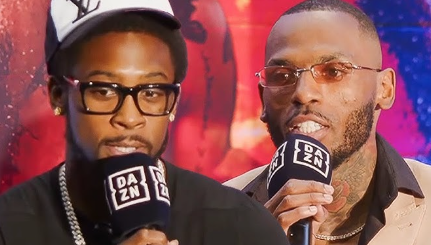
Some rivalries in boxing are born from championship pursuits.
Others emerge from personal hatred.
Keyshawn Davis and Nahir Albright now sit somewhere in the uncomfortable space between both.
Their long-brewing rematch has generated sharply divided reactions throughout boxing.
Some believe the fight is overcooked, a recycled matchup between two fighters who already settled business years ago when Davis earned a close victory over Albright early in their professional careers.
Others believe the contrary, that the fight should not even exist at this stage of Davis’ ascent, considering Albright has yet to establish himself as a true world-level contender.
Effectively, the fight is undercooked.
Yet despite the criticism surrounding the matchup itself, the hostility between the two men is undeniably real.
That reality has transformed Davis vs. Albright II from a routine rematch into one of the sport’s most emotionally charged domestic grudge fights.
The tension escalated dramatically last year after Albright defeated Kelvin Davis, one of Keyshawn’s brothers, on a regional Top Rank card in Virginia.
While Albright celebrated the upset backstage, the situation reportedly spiraled into violence when Keyshawn Davis, Keon Davis, and members of their camp confronted him physically.
Albright later emerged with visible swelling on his head and a bloodied nose, claiming he had been jumped by the Davis brothers following the fight.
The incident instantly deepened what had already been lingering resentment between the camps.
For Davis, the altercation appeared rooted in family pride and longstanding animosity.
For Albright, it became personal validation that he had mentally rattled one of boxing’s most heavily promoted young stars.
Now the rivalry returns to the ring carrying far greater emotional stakes than their first encounter.
That original bout, fought before Davis became one of Top Rank’s centerpiece prospects, ended in a competitive decision victory for the Olympic silver medalist.
While Davis officially received the win, Albright pushed him harder than many expected, exposing moments of vulnerability while proving durable enough to withstand Davis’ athleticism and sharp combination punching.
Since then, the trajectories of both fighters have diverged sharply.
Davis rapidly evolved into one of America’s premier lightweight contenders, blending charisma, elite amateur pedigree, and explosive talent into a package Top Rank openly views as future pay-per-view material.
His victories over Jose Pedraza, Denys Berinchyk, Miguel Madueno, and Gustavo Lemos elevated him from prospect status into the fringes of world title contention.
Albright’s path has been far less straightforward.
The Philadelphia native has repeatedly positioned himself as one of the division’s toughest gatekeepers without fully breaking through into championship territory.
His gritty 10-round draw against Frank Martin, a fighter who previously challenged for a world title, remains perhaps the clearest evidence of his strange standing within the sport.
Albright proved durable, skilled, and dangerous enough to compete with elite-level opposition, yet never quite elevated himself into boxing’s true upper tier.
That ambiguity now defines much of the debate surrounding the rematch.
If Davis dominates decisively, critics will argue he merely handled business against a fighter beneath world championship level.
If the fight remains competitive again, questions will immediately resurface regarding Davis’ readiness for the elite names at lightweight and super-lightweight such as Shakur Stevenson, Gervonta Davis, or Raymond Muratalla.
In many ways, Albright occupies one of boxing’s most uncomfortable positions.
He is good enough to expose flaws, but not accomplished enough for victories over him to dramatically enhance a résumé.
Still, fighters inside the sport understand the danger attached to his name.
Albright’s awkward rhythm, physical toughness, and willingness to fight aggressively in hostile environments have consistently made him difficult to look impressive against.
He has become the type of opponent prospects often avoid because the reward rarely matches the risk.
Davis, however, no longer appears interested in avoiding anything.
The Norfolk native has repeatedly embraced confrontation throughout his rise, whether verbally targeting rivals or publicly demanding bigger fights against champions.
The rematch with Albright seems driven as much by emotion as professional necessity.
That emotional investment could become dangerous.
Personal rivalries in boxing often create volatile fights precisely because technical discipline becomes secondary to pride.
Davis remains the more gifted fighter on paper, faster, sharper, more athletic, and significantly more accomplished internationally.
But Albright has already proven capable of frustrating him once before, and now enters the rematch carrying the confidence of knowing how deeply he has already affected Davis outside the ring.
The uncertainty surrounding what victory actually means only adds another layer to the fight.
For Davis, a win likely changes little regarding his standing among the lightweight elite.
Expectations already place him beyond opponents of Albright’s level.
For Albright, however, the opportunity is enormous.
A victory would instantly become the defining result of his career while simultaneously damaging one of boxing’s fastest-rising American stars.
It would also validate years of being dismissed as little more than a rugged spoiler.
Perhaps that imbalance explains why the fight feels so difficult to categorize.
It is simultaneously too personal to ignore and too complicated to fully justify from a rankings standpoint.
Boxing has never been governed entirely by logic.
Sometimes, resentment alone is enough.
[Shane Mosley Jr. Destroys Serhii Bohachuk at Middleweight in Upset KO - Career Resurgence Imminent?]

Despite being staunchly opposed to Zuffa Boxing, DQ w/ Damani has a duty to fair reporting of the sport, and one of its many upstarts has earned a career-changing win.
“Sugar” Shane Mosley Jr. was last seen on a PBC card late last year, rounding out the Pitbull Cruz vs. Lamont Roach undercard in a spectacular slugfest against Jesus Ramos.
Mosley gave Ramos all he could handle in that fight, battling to an entertaining decision that did not go his way.
Mosley’s career has been marred several times because he has not been able to lock in the important names in the divisions he campaigns in, often finding himself trapped in boxing’s middle ground, respected enough to stay relevant, but rarely prioritized when major opportunities emerged.
That reality made Saturday night’s result almost impossible to predict.
Standing across from Mosley was Serhii Bohachuk, one of the most feared pressure fighters in boxing and a man widely viewed as a future world champion despite previous close losses at the elite level.
Bohachuk’s brutal body punching, relentless pace, and reputation for violence made him a massive betting favorite entering the contest.
Many expected Mosley to provide toughness and experience before eventually being overwhelmed.
Instead, Mosley authored the defining moment of his professional career.
From the opening rounds, the son of Hall of Famer Shane Mosley looked unusually composed against Bohachuk’s pressure.
Rather than retreat endlessly under the Ukrainian’s forward march, Mosley stood his ground in key exchanges and repeatedly disrupted Bohachuk’s rhythm with sharp counters and disciplined movement.
Bohachuk still enjoyed moments of success early, particularly when he trapped Mosley near the ropes and ripped combinations to the body.
But something felt off.
The terrifying offensive momentum Bohachuk typically builds never fully materialized.
Mosley refused to fold under the pressure.
As the fight progressed, confidence visibly grew in Mosley’s corner.
By the middle rounds, Mosley’s timing began creating increasingly dangerous openings.
He slipped several of Bohachuk’s looping hooks and answered with clean right hands down the middle, snapping Bohachuk’s head back repeatedly.
The crowd inside the arena gradually shifted from polite curiosity to genuine disbelief as the underdog continued matching the favorite punch for punch.
Then came the moment nobody saw coming.
Late in Round 8, Bohachuk pressed forward aggressively attempting to force another firefight near the ropes.
Mosley calmly pivoted off the line and landed a perfectly timed right hand over Bohachuk’s jab, immediately staggering the Ukrainian.
As Bohachuk attempted to recover, Mosley exploded with a follow-up barrage capped by a crushing left hook that sent Bohachuk collapsing violently to the canvas.
The UFC Apex erupted.
Bohachuk attempted to rise but stumbled badly as the referee waved the fight off, completing one of the year’s most shocking knockouts.
The victory instantly transforms the trajectory of Mosley's career.
For years, Mosley Jr. carried the burden attached to one of boxing’s most recognizable surnames.
Comparisons to his father followed him relentlessly throughout his rise, often overshadowing the work he quietly put together against increasingly difficult opposition.
Critics questioned whether he belonged at contender level, while supporters pointed toward his toughness and willingness to fight dangerous opponents without hesitation.
Saturday provided the clearest answer yet.
Mosley did not simply survive against Bohachuk, he stopped one of the sport’s most dangerous offensive fighters cold.
The upset also dramatically reshapes the middleweight picture.
Bohachuk entered the fight hovering near another potential title shot following competitive battles against elite-level opposition.
His aggressive style and knockout power had made him a nightmare matchup for much of the division.
Now, those conversations belong to Mosley.
Although Zuffa will never be able to draw a legitimate world title fight, Mosley moves closer to the top names in the division.
Potential matchups against names such as Israil Madrimov, or even a rematch with Jesus Ramos suddenly feel realistic rather than aspirational.
More importantly, Mosley finally owns the signature victory his career had long lacked.
In a sport where opportunities are often dictated by moments rather than consistency, one shocking knockout can change everything.


Comments